
This guide covers creating products in Kanamé so you can sell them through your storefront, payment links, or invoices. You will set product info, configure pricing, manage variants, assign collections, and publish.
Creating products lets you organize your offerings, control pricing structures, manage inventory, and improve how items appear in your online storefront.
Where to find it
Payments → Products in the main navigation.
This screen shows your product inventory. From here you can view existing products, import in bulk, or create new ones manually.
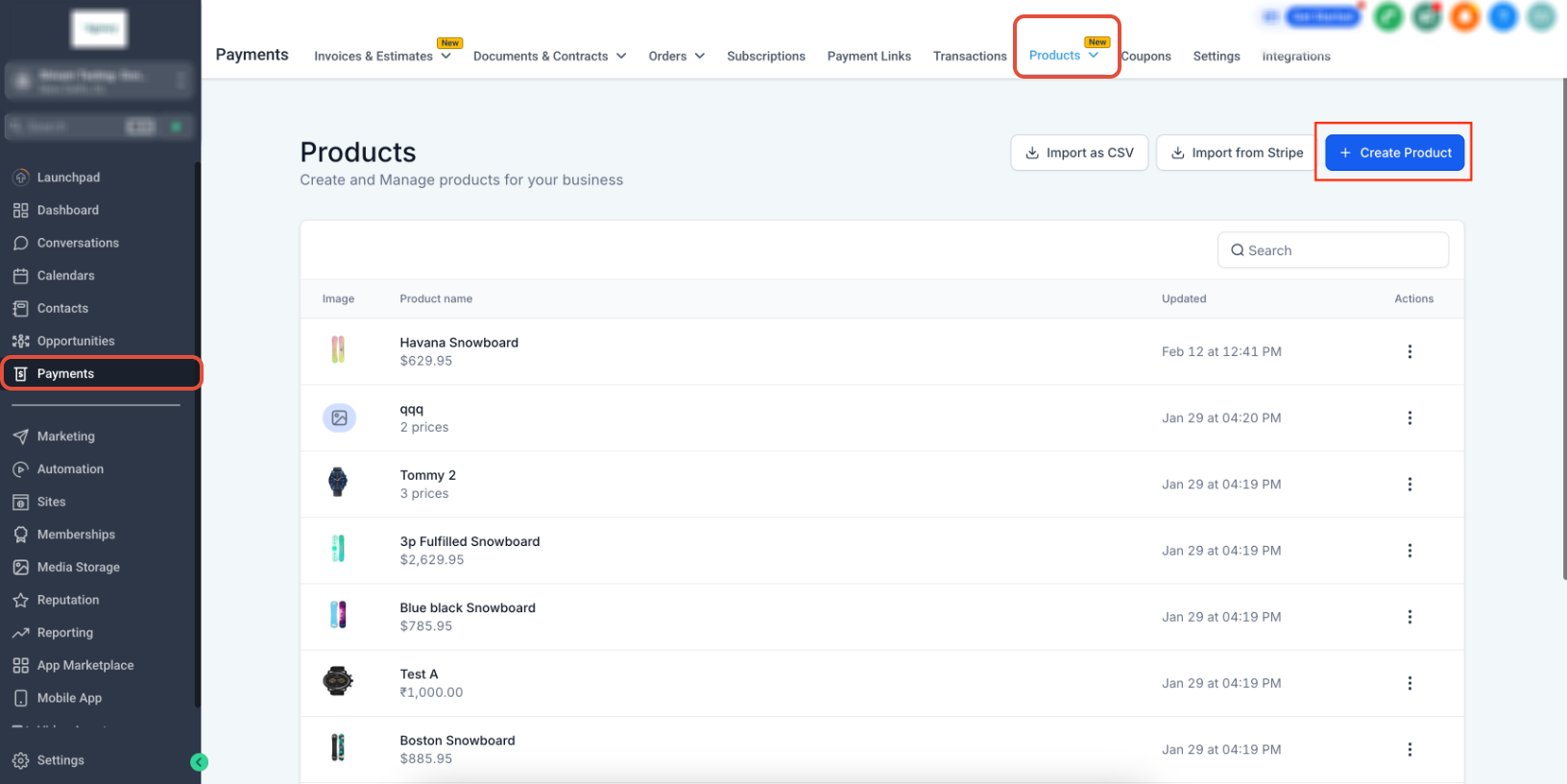 Products page
 Create a new product
- Click Create Product in the upper-right corner
- The product editor opens with the configuration page
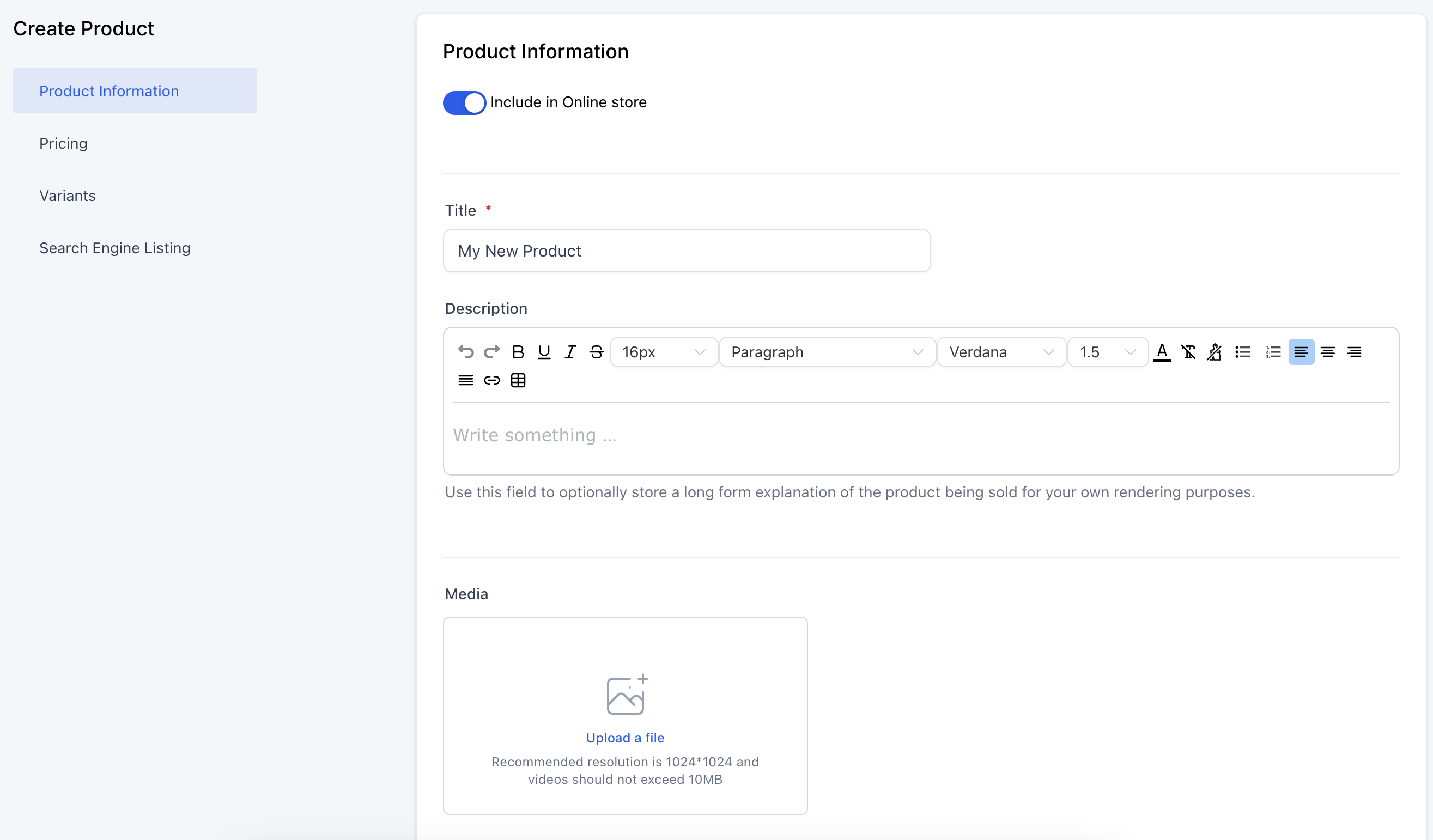 Product editor screen
 Basic product information
- Include in Online Store — toggle on if you want the product to appear in your storefront
- Product Title — clear, descriptive name customers will see
- Description — detailed product information (formatting editor available)
- Media Upload — product images in the order to display High-quality images improve customer trust and conversion rates.
Organize products with collections
Collections group related products so customers can browse categories easily.
To add a product to a collection:
- Select the Collections field
- Search for an existing collection
- Assign the product to one or more collections If no collection exists yet:
- Click the + icon
- Create a new collection
- Add the product to it immediately Collections help organize products by category — for example: clothing, accessories, seasonal items, featured products.
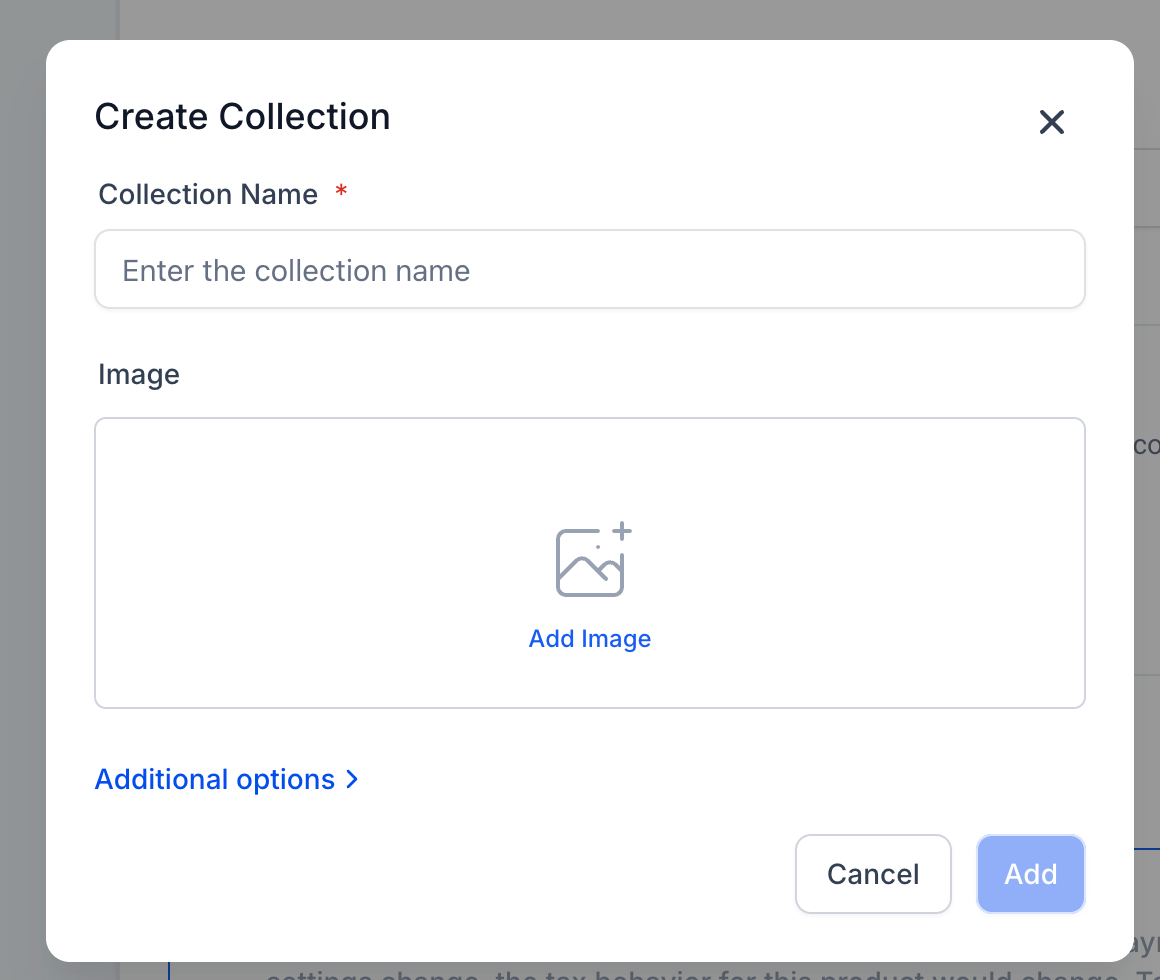 Collections field
 Configure product taxes
Product taxes control how tax is calculated for each item.
Product Tax Code — select the appropriate tax category for automatic tax calculations.
Include Tax in Prices — three options:
- As per global settings — follow your default tax configuration
- Yes — taxes included in displayed price
- No — taxes added separately during checkout Attach Tax Rates — manual tax rates can be attached if needed (useful where automatic tax calculations are unavailable).
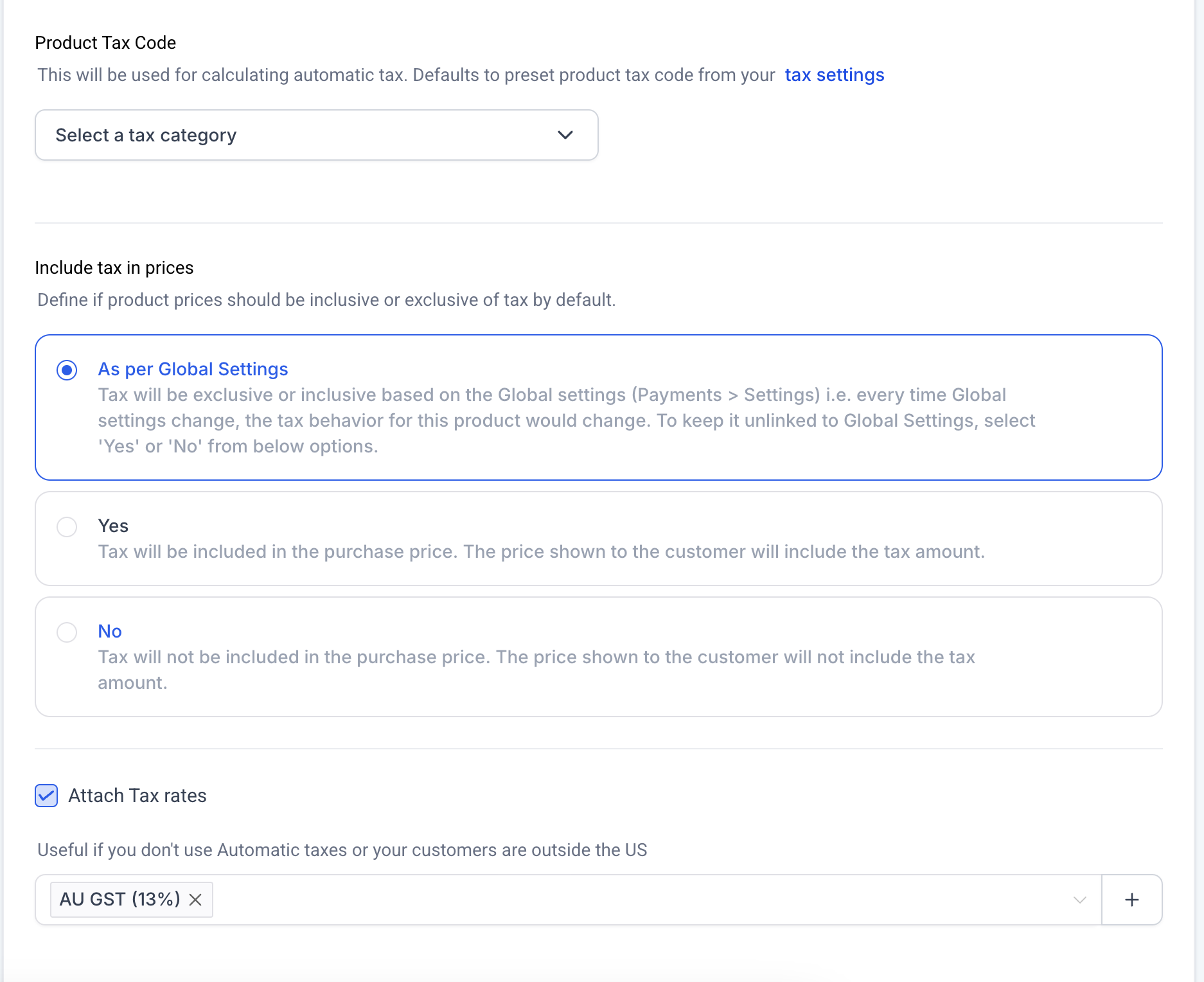 Product tax configuration
 Set product pricing
Pricing defines how customers are charged.
For one-time purchases, configure:
-
Pricing Name — a label for this pricing structure
-
Pricing Type — select One-time for a single payment
-
Amount — the purchase price Optional pricing options:
-
Compare-at Price — displays a higher original price to highlight discounts
-
Track Inventory — enable inventory tracking
-
Available Quantity — define how many units are available
-
Continue Selling When Out of Stock — allow purchases even when inventory hits zero
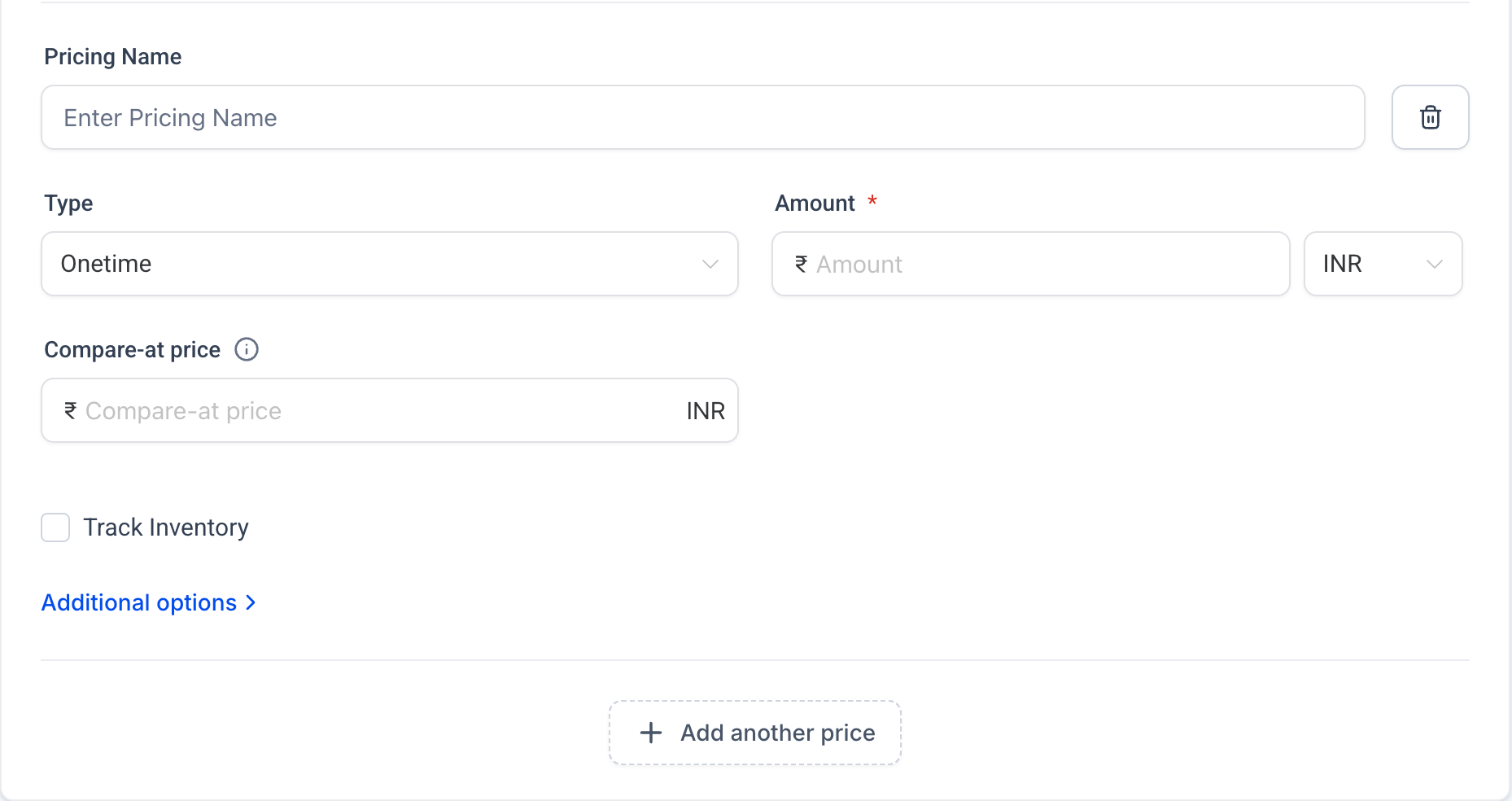 One-time pricing
 Configure recurring pricing
For subscriptions or installment payments:
- Billing Period — how often the customer is billed (monthly, yearly, etc.)
- Trial Period — optional days before billing begins
- Number of Payments — limit total billing cycles
- Setup Fee — optional one-time charge added to the first payment Recurring pricing is commonly used for membership programs, subscription services, and payment plans.
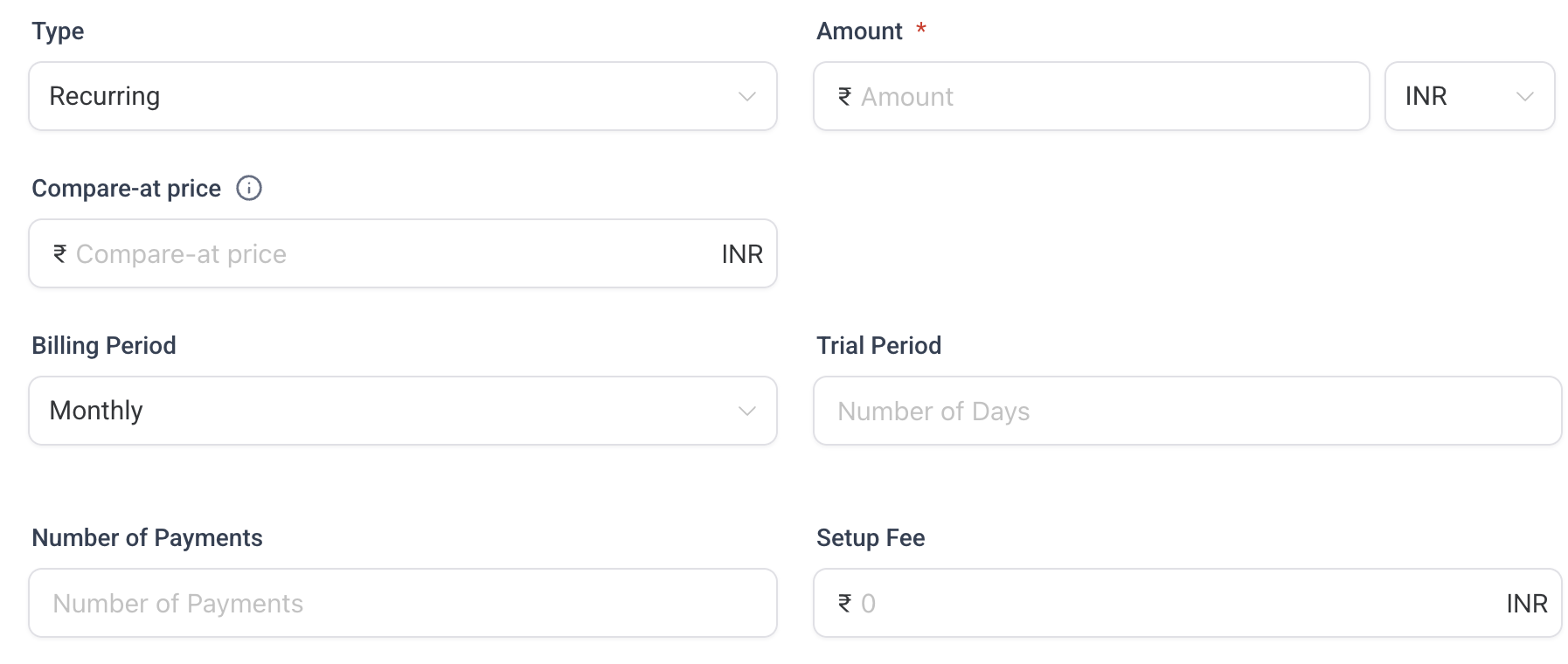 Recurring pricing configuration
 Add product variants
Variants let a single product have multiple options like sizes or colors.
- Enter an Option Name (e.g., Size or Color)
- Add Option Values (e.g., Small, Medium, Large)
- Click Done to generate the variants Each variant can have its own price, compare-at price, inventory quantity, and image.
Variants help avoid creating separate listings for similar items.
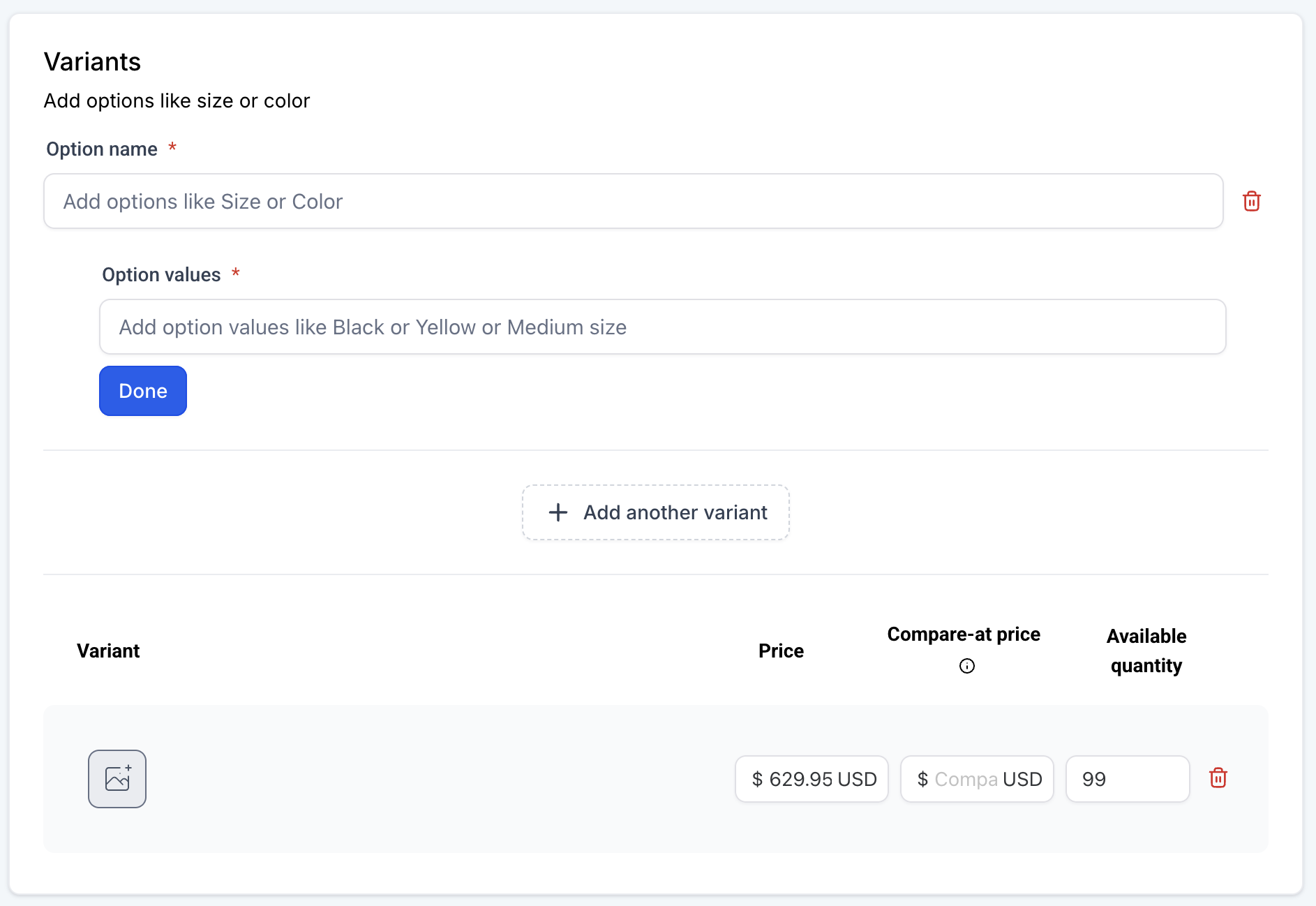 Product variants configuration
 Save and publish
- Review product information
- Click Save to store the product
- Set the product status:
- Draft — product hidden from customers
- Active — product visible in your store Publishing makes the product available for customers to purchase.
Best practices
- Use clear product titles — descriptive names customers can easily search
- Upload high-quality images — clearly show the product and its variations
- Organize with collections — well-organized collections improve navigation
- Track inventory — helps avoid overselling
- Use variants instead of duplicates — keeps your store organized
Common questions
Can I create multiple pricing options for the same product?
Yes. Add multiple pricing options including one-time or recurring structures.
What happens if inventory reaches zero?
If “Continue Selling When Out of Stock” is disabled, customers can’t purchase once inventory hits zero.
Can I edit a product after publishing?
Yes. Edit any time from the Products page.
Can products belong to multiple collections?
Yes. A single product can be assigned to multiple collections.